New build vs period property: Which apartment suits you?

- The special features of period properties
- Advantages of period properties
- Disadvantages of period properties
- The advantages of modern new builds
- Advantages of new builds
- Disadvantages of new builds
- Which apartment type suits you?
- The ideal period-property resident
- The ideal new-build resident
- For period properties, check:
- For new builds, check:
- Frequently asked questions about new build vs period property
- Are ancillary costs really lower in new builds?
- What renovation costs should I plan for a period property?
- Is a period property a better capital investment?
- Can I refurbish a period property to new-build energy standards?
- Which form of housing is better for families?
The decision between a new build and a period property is one of the most important when searching for an apartment or purchasing real estate. Both forms of housing have their unique advantages and should be evaluated according to personal needs, budget, and lifestyle. Period properties score with historic charm and often lower purchase prices, while new builds offer modern standards and energy efficiency. The right choice depends on your individual priorities.
Period property: Bringing character and history to life
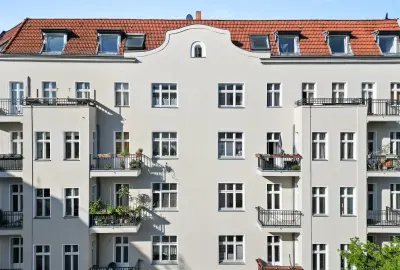
Period properties, mostly built between 1870 and 1945, are the heart of many German cities and offer an incomparable living experience with authentic flair.
The special features of period properties
Period properties are characterized by their distinctive architectural details. High ceilings between 3 and 4 meters create a generous sense of space, while stucco ornamentation and coffered ceilings convey historical elegance. Wide floorboards and parquet give the rooms a warm, comforting atmosphere. Large windows provide optimal natural light, and many period buildings feature a balcony or a small terrace.
The classic room layout, from the representative front room to the cozy Berliner Zimmer and on to the kitchen, offers diverse design possibilities. Every period apartment is a one-off with individual features that modern standard apartments cannot offer.
Advantages of period properties
- Authentic atmosphere: Historical details create a unique living ambience.
- Central locations: Often found in sought-after inner-city areas with good infrastructure.
- Value stability: Established locations with long-term stable value development.
- Individual design: Flexible floor plans enable creative use of space.
- Solid construction: Proven building materials and robust structures.
Disadvantages of period properties
Period properties also come with challenges. The often less efficient insulation leads to higher heating costs, and any renovation work on stucco or historical elements can be expensive. In listed buildings, modernization measures are restricted, and poor sound insulation can make buildings noisy.
New build: Modern standards for contemporary living
Modern new-build apartments impress with contemporary features and energy-efficient construction that is perfectly tailored to today’s housing needs.
The advantages of modern new builds
New builds offer current energy standards such as KfW 55 or better efficiency, which is clearly reflected in lower heating costs. Smart home integration is already considered during planning, and environmentally friendly heating systems enable sustainable living.
Modern features include built-in kitchens to the latest standards, high-quality bathroom fittings, and usually an elevator in multi-story buildings. Accessible design and available underground parking spaces complete the modern living concept.
Advantages of new builds
- Energy efficiency: Low running costs thanks to modern insulation and heating technology.
- Modern features: Current standards in kitchens, bathrooms, and building services.
- Low maintenance: A 10-year warranty and modern systems reduce upkeep.
- Accessibility: Age-appropriate design for long-term use.
- Planning certainty: New building standards and clear warranty provisions.
Disadvantages of new builds
Higher purchase prices are the clearest disadvantage of new builds. In addition, the characteristic charm of historic buildings is often missing, and the location is frequently less central than in established period districts. Standardized floor plans offer fewer options for individual design.
New build vs period property energy cost comparison
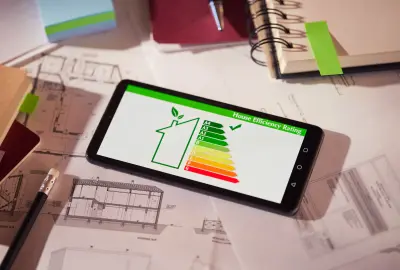
The energy cost comparison is often a decisive criterion when choosing between a new build and a period property. Modern new builds consume significantly less energy thanks to optimal insulation and efficient heating systems. While a non-refurbished period building often requires 150 to 200 kWh per square meter per year, modern new builds manage with 40 to 60 kWh.
In an 80-square-meter apartment, annual heating costs can differ by 800 to 1,200 euros. Over the years, these savings offset part of the higher purchase price of new builds. However, you should also consider the options for energy-efficient refurbishment in period properties, which are supported by government funding.
Period charm vs new-build comfort
The decision between period charm and new-build comfort is very personal. Period properties offer unique details such as historic stucco elements, original floorboards, and the characteristic room layout that breathes history. Each apartment tells its own story and offers individual character.
New builds, on the other hand, score with well-thought-out floor plans designed for modern lifestyles. Open-plan kitchens, optimal use of space, and modern materials create functional living comfort. The choice depends on whether you prefer nostalgic charm or practical functionality.
Investment: New build vs period property investment - which is worthwhile?
As a capital investment, both forms of housing have their merits. Period properties in central locations often offer more attractive entry prices and benefit from the high demand for characterful apartments in established neighborhoods. Value stability is usually given due to highly sought-after inner-city locations.
New builds as investments score with low maintenance costs in the first years and warranty coverage. The modern features and energy efficiency appeal to many tenants, which results in stable rental income. However, purchase costs are higher and initial yields are lower.
The decision should be based on local market conditions, the target tenant group, and your personal risk tolerance.
Costs in a direct comparison
The overall cost comparison shows clear differences between the two housing types:
Period property costs:
- Often lower purchase prices per square meter.
- Higher heating costs (150 to 250 €/m² annually).
- Possible renovation costs for historical elements.
- Value stability thanks to desirable locations.
New-build costs:
- Higher acquisition costs.
- Low ancillary costs due to efficiency (50 to 80 €/m² annually).
- Lower maintenance in the first 10 years.
- A predictable cost situation.

Which apartment type suits you?
The ideal period-property resident
You are the perfect period-property resident if you appreciate historical details and authentic ambience. As an individualist, you love the fact that every apartment is unique. You want to live centrally in established neighborhoods and value the creative possibilities that high ceilings and flexible floor plans offer. As an investor, you view period property as a value-stable capital investment.
The ideal new-build resident
You choose a new build if modern features are a priority for you and low running costs are important. As a family, you focus on functional floor plans and safety. You appreciate low-maintenance living, and as a senior, accessibility and an elevator are decisive criteria.
Viewing checklist
For period properties, check:
- The condition of stucco and historical elements.
- Windows and heating for efficiency.
- Floorboards and parquet for any renovation needs.
- Ceiling height and lighting conditions.
- Any listed-building requirements.
For new builds, check:
- The energy certificate and efficiency class.
- Modern features and smart home options.
- The floor plan for functionality.
- The scope of the warranty.
- Underground parking and additional services.
Make use of funding opportunities
Various funding opportunities are available for both types of housing. For period properties there is listed-building depreciation for tax advantages, KfW funding for energy refurbishment, and various modernization programs.
New builds benefit from KfW energy-efficient home funding, the “Home Ownership for Families” program, and grants for new technologies. These subsidies can significantly influence the decision and should be factored into your calculations.
Future trends: Modern technology in historic buildings
The future shows interesting developments in the combination of old and new. Historic period apartments can now be equipped with modern technology. Smart home systems, efficient heating, and contemporary electrical installations combine the charm of the past with the comfort of the present.
Sustainable refurbishment concepts make it possible to preserve historic character while significantly improving energy efficiency. This creates apartments that unite the best of both worlds.
The decision between a new build and a period property depends on your personal priorities, your budget, and your lifestyle. Period properties offer incomparable charm, history, and often central locations at attractive prices. New builds score with efficiency, comfort, and modern standards. At E-Homes you will find both options and receive expert advice for your individual situation. Our experienced experts know the local real estate markets in detail and help you make the optimal choice. Discover both charming period gems and modern new-build apartments now and find your perfect home.
Frequently asked questions about new build vs period property
Are ancillary costs really lower in new builds?
Yes, modern new builds consume significantly less energy thanks to optimal insulation and efficient heating technology. Annual heating costs can be 30 to 50 percent lower than in non-refurbished period properties. However, property taxes are often higher for new builds.
What renovation costs should I plan for a period property?
Renovation costs vary greatly depending on the condition. For a basic modernization, you should plan 300 to 800 euros per square meter. Listed buildings can be significantly more expensive, but they offer tax advantages.
Is a period property a better capital investment?
Period properties in central locations often have higher rental yields and benefit from the appreciation of established neighborhoods. New builds score with lower maintenance costs. The decision depends on the specific location and market situation.
Can I refurbish a period property to new-build energy standards?
With modern refurbishment technology, period properties can also reach high energy standards. KfW funding supports such measures. However, costs are often considerable, and in the case of listed buildings there are limits.
Which form of housing is better for families?
New builds often offer more family-friendly floor plans, accessibility, and modern safety standards. Period properties have larger rooms and more individuality, but they may require child-safe adaptations of historical elements.

You may also find these articles interesting
Finding Affordable Housing in Berlin: Guide to Fair Rents
Condominium fee (Hausgeld): Costs, calculation and tips