Energy Performance Certificate for Apartments: Guide to Efficiency and Costs


- Energy Performance Certificate for Apartments: Your Guide to Energy Efficiency
- What is an Energy Performance Certificate and why do you need it?
- Demand-based or consumption-based certificate: the key differences
- Understanding the EPC classes and their meaning
- EPC requirement when selling: what sellers need to know
- How much does an Energy Performance Certificate cost? Price overview
- Reading and interpreting the certificate correctly
- Common issues and what you should watch out for
- EPC for rental apartments: what tenants need to know
- Energy efficiency and value appreciation for condominiums
- Conclusion: the Energy Performance Certificate as a decision-making aid
- Frequently asked questions about the Energy Performance Certificate
Energy Performance Certificate for Apartments: Your Guide to Energy Efficiency
The Energy Performance Certificate is an essential document when buying or renting an apartment. It provides you with important information about the property’s energy consumption and efficiency. This certificate is not only required by law, it also helps you estimate long-term costs and make informed decisions.
What is an Energy Performance Certificate and why do you need it?
An Energy Performance Certificate (EPC) is a standardised document that assesses the energy quality of buildings. It works similarly to energy labels on electrical appliances and shows at a glance how energy efficient an apartment is. The certificate contains key figures on energy consumption or energy demand, as well as information on the type of heating used and the year of construction.
The document is mandatory for landlords and sellers and must be presented during the viewing. As a tenant or buyer, you receive an objective assessment of the expected energy costs. Differences can be significant, especially in older buildings. Modern refurbished apartments often use only a fraction of the energy of unrefurbished period buildings.
The EPC is valid for ten years and may only be issued by qualified experts such as architects, civil engineers or energy consultants. Failure to comply with the obligation to present it can result in fines of up to 15,000 euros.
Demand-based or consumption-based certificate: the key differences
There are two different types of EPCs that differ fundamentally in their informative value. The demand-based certificate is based on a technical analysis of the building and theoretically calculates energy demand under standardised conditions. It takes into account factors such as the building envelope, insulation, windows and heating technology.
The consumption-based certificate, on the other hand, is based on actual consumption data from the past three years. It is cheaper to produce but less meaningful, since the occupants’ heating behaviour can vary greatly. A thrifty household may achieve lower values in a poorly insulated apartment than a household with high heating needs in a well-insulated building.
For residential buildings with fewer than five residential units, a demand-based certificate is generally required, except for new builds from 1977 onwards that already meet specific thermal insulation regulations. For larger residential buildings, owners can choose between both variants, although the demand-based certificate provides a more reliable basis for purchase decisions.
Understanding the EPC classes and their meaning
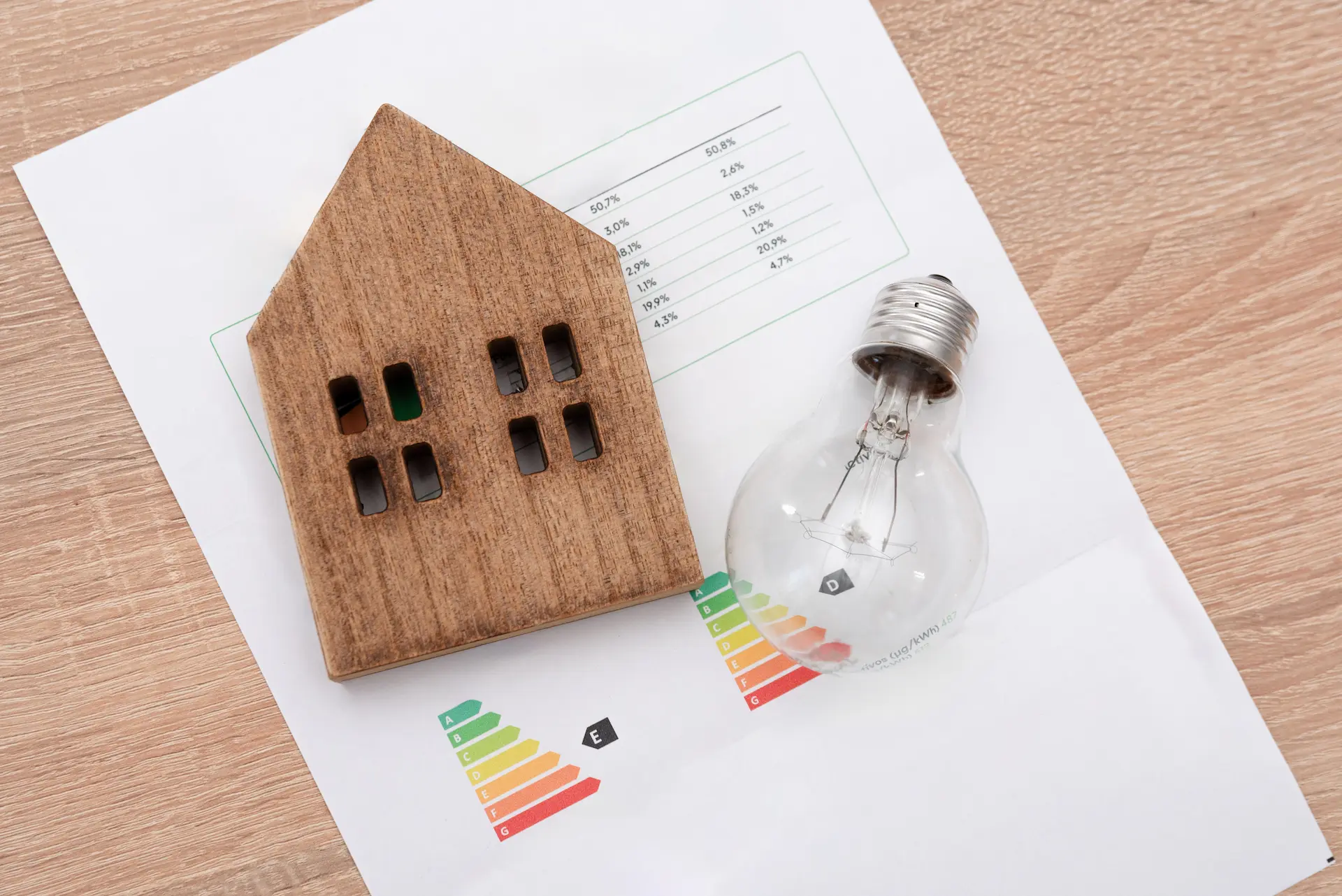
Energy efficiency classes range from A+ (very good) to H (very poor) and follow a coloured scale from green to red. The class is determined based on energy demand or consumption in kilowatt-hours per square metre per year (kWh/m²a).
Class A+ to B (up to 75 kWh/m²a): These apartments meet the most modern standards and were usually built after 2010 or comprehensively refurbished. You can expect very low heating costs.
Class C to D (75-150 kWh/m²a): Solid energy standards, typical of buildings from the 1990s or partially refurbished older properties. Heating costs are in the mid-range.
Class E to F (150-250 kWh/m²a): Increased energy demand, often found in buildings from the 1970s and 1980s or unrefurbished older properties. You should budget for higher ancillary costs.
Class G to H (over 250 kWh/m²a): Very high energy consumption, typical of unrefurbished period buildings or properties with outdated heating systems. Energy retrofitting is strongly recommended.
At E-Homes you will find apartments across various energy efficiency classes, from modern new builds with an optimal energy balance to charming period properties with renovation potential.
EPC requirement when selling: what sellers need to know
When selling an apartment, presenting the EPC is required by law. The obligation applies already at the viewing stage, not only at the notary appointment. Real estate advertisements must also include the most important energy indicators, including the efficiency class and energy demand or consumption.
Sellers must present the certificate no later than the first viewing and provide a copy. The owner generally bears the cost of obtaining it, even if they plan to sell. A missing or incomplete EPC can not only lead to fines, it can also deter potential buyers.
It is particularly important to state all relevant data correctly in the listing. This includes the type of certificate (demand-based or consumption-based), the energy value, the efficiency class and the year of construction. The primary energy source for heating must also be specified.
Sellers should ensure that the EPC is issued by a qualified professional and that all required information is complete. If in doubt, it is advisable to obtain a new certificate, since incorrect or incomplete documents can lead to legal issues.
How much does an Energy Performance Certificate cost? Price overview
The cost of an EPC varies considerably depending on the type and level of effort. A consumption-based certificate is the cheapest option and costs between 50 and 100 euros online or 100 to 150 euros from a local provider. Processing is usually based on the submitted documents without an on-site inspection.
The demand-based certificate is significantly more expensive because a detailed building analysis is required. For single-family homes or smaller residential buildings, costs range between 300 and 500 euros. For larger multi-family buildings, prices can rise to 800 to 1,500 euros, depending on the complexity of the building.
Online providers often advertise particularly low prices starting at 50 euros. However, you should pay attention to the issuer’s qualifications. Only certified experts are allowed to issue EPCs, and disreputable providers can produce invalid documents. Saving a few hundred euros is not worth it if the certificate is later not recognised.
When choosing a provider, you should look for references, qualifications and price transparency. Reputable providers are happy to explain the process and which documents are needed.
Reading and interpreting the certificate correctly
Understanding an EPC is easier than you might think if you know the most important sections. The first page contains basic building data such as address, year of construction and building type. Here you will also find whether it is a demand-based or consumption-based certificate.
The second page shows the coloured energy scale from green (very good) to red (very poor). The black arrow marks the property’s energy value. CO₂ emissions are also specified, which are important for environmentally conscious buyers.
The primary energy demand is particularly important, as it accounts for the entire energy expenditure including extraction, conversion and transport of energy sources. This value is often higher than the final energy demand, which indicates only the direct consumption in the building.
The third page contains modernisation recommendations that provide guidance on possible improvements. These are not binding, but they offer valuable hints for future investments in energy efficiency.
Common issues and what you should watch out for
Various issues can arise with EPCs that you should be aware of. Common deficiencies include incomplete or incorrect building data, a missing issuer’s signature or expired validity. Make sure all mandatory information is fully completed.
Another issue is unrealistic values, which may indicate calculation errors or insufficient data. If the specified energy consumption differs significantly from what you would expect for similar buildings, you should ask critical questions.
Consumption-based certificates can be misleading if previous tenants heated very sparingly or the apartment stood empty for a long time. The stated values then do not correspond to normal living comfort. For older buildings, a demand-based certificate is often the more reliable choice.
You should be especially careful with online providers. Check whether the issuer truly holds the required qualifications. Disreputable providers can often be recognised by very low prices, missing contact details or incomplete legal information.
EPC for rental apartments: what tenants need to know
As a prospective tenant, you have the right to see the EPC during the viewing. Landlords are obliged to present the document without being asked. Real estate listings must already include the most important energy indicators.
The EPC helps you estimate expected heating costs. In an apartment with high energy consumption, ancillary costs can be significantly above average. Especially in Berlin, where many older buildings are still unrefurbished, differences between apartments can be substantial.
A good EPC also shows modernisation recommendations. These indicate whether the landlord may plan energy retrofits in the near future that could lead to rent increases. On the other hand, such measures can also reduce heating costs.
When searching for an apartment, you should consider the EPC as one criterion among many. An apartment in a perfect location with somewhat higher energy consumption can be a better choice than a very energy-efficient apartment in a poor location.
Energy efficiency and value appreciation for condominiums
For buyers of condominiums, the EPC is relevant not only for ongoing costs but also for long-term value development. Energy-efficient apartments are increasingly in demand among buyers and tenants and often achieve higher prices.
A poor energy rating does not have to be a deal breaker, especially for period properties with special charm. It is important to factor the cost of potential energy retrofits into your purchase decision. Modern insulation, new windows or an efficient heating system can significantly increase a property’s value.
At E-Homes we are happy to advise you on the energy characteristics of our apartments. Our portfolio includes both energy-efficient new builds and characterful older properties with varying levels of refurbishment. This way you can find the apartment that best suits your needs and budget.
Government incentives for energy retrofits often make it attractive to buy an apartment with improvement potential. KfW loans and grants can cover a significant share of renovation costs and make the investment economically appealing.

Conclusion: the Energy Performance Certificate as a decision-making aid
The Energy Performance Certificate is an important tool for making informed housing decisions. It helps you calculate long-term costs and assess the environmental impact of your housing choice. Whether buying or renting, whether period property or new build, the EPC provides objective comparisons.
At E-Homes we support you with our expertise and help you correctly assess the energy characteristics of our apartments. Our goal is for you to find a home that suits you today and remains a good decision in the long term. Feel free to contact us for personal advice on all aspects of energy efficiency and living quality.
Frequently asked questions about the Energy Performance Certificate
How long is an Energy Performance Certificate valid?
An EPC is valid for ten years from the date of issue. After this period, a new certificate must be obtained if the property is to be sold or re-let. If comprehensive energy retrofits are carried out, it is advisable to obtain a new certificate even before the validity period ends.
What happens if no Energy Performance Certificate is provided?
Landlords and sellers who do not provide a valid EPC can face fines ranging from 500 to 15,000 euros. The amount depends on the severity of the violation. Incomplete information in real estate listings can also lead to penalties.
Can I apply for the Energy Performance Certificate online?
Yes, EPCs can be applied for online. Make sure to use reputable providers with qualified issuers. The issuer must be suitably qualified, for example as an architect, civil engineer, physicist or energy consultant. Very low-priced offers are often not reputable.
Which documents do I need to apply?
For a consumption-based certificate, you need the heating cost statements for the past three years, as well as basic building data such as year of construction, floor area and type of heating. For a demand-based certificate, more detailed construction data is required, and an on-site inspection is often necessary.
Do I have to pay for the Energy Performance Certificate as a tenant?
No, the cost of the EPC is generally borne by the property owner. As a tenant, you only have the right to inspect and receive a copy of the document. Obtaining the certificate is the landlord’s obligation and its cost cannot be passed on to tenants.

You may also find these articles interesting

New build vs period property: Which apartment suits you?

Finding Affordable Housing in Berlin: Guide to Fair Rents