What Is Short-Term Living? Benefits, Costs and Tips


- What Is Short-Term Living?
- What Does Short-Term Living Mean in Practice?
- Who Is Short-Term Living Suitable For?
- Short-Term Living in Berlin
- Furnished Short-Term Living in Berlin
- Costs and Financing for Short-Term Living
- Advantages of Short-Term Living
- Disadvantages and Challenges
- Tips for Finding the Right Accommodation
- Legal Aspects of Short-Term Living
- Future Trends in Short-Term Living
- Conclusion
- Frequently Asked Questions about Short-Term Living
What Is Short-Term Living?
Short-term living is a flexible housing solution for people who need furnished apartments on a temporary basis. This type of housing is particularly aimed at professionals on business trips, students spending a semester abroad, people in transitional career phases, or anyone looking for a place to stay for private reasons for a limited period of time. Unlike traditional long-term rentals, short-term living typically offers fully furnished apartments with flexible rental periods ranging from just a few months to up to a year.
What Does Short-Term Living Mean in Practice?
Short-term living refers to fixed-term rental agreements in fully equipped flats or apartments. The accommodation is fully furnished and includes all necessary household appliances, bed linen, dishes, and often even an internet connection. You practically move in with just your suitcase and can start living right away without having to worry about furniture or setting anything up.
The rental period varies depending on the provider and your personal needs. Typical time frames range from three months to two years. Many providers offer a minimum rental period of three months and a maximum rental period of twelve months. This flexibility makes short-term living an ideal solution for anyone who does not want to be tied to one place permanently.
A key difference from standard renting lies in the legal structure. With short-term living, a fixed-term lease is often signed, which is limited from the outset and usually cannot be extended. This gives both parties planning security because both tenant and landlord know exactly when the tenancy ends.

Who Is Short-Term Living Suitable For?
This type of housing appeals to various target groups. Business travellers and project-based workers appreciate the flexibility when they have to work in a new city for several months. Instead of paying high hotel costs every day, a temporary apartment offers significantly more comfort and cost savings for longer stays.
Students benefit especially during semesters abroad or internships from this housing solution. They can focus fully on their studies without having to think about furniture or household equipment. Families who need to relocate temporarily due to professional changes also find short-term living to be a practical transitional solution.
People going through separation or divorce often use this option to buy time and look for a long-term solution at their own pace. Short-term living is also suitable for people whose own home is being renovated or who have not yet found suitable accommodation after a move.
Short-Term Living in Berlin
As a vibrant metropolis, Berlin offers particularly many options for temporary living. The city attracts people from all over the world, whether for professional projects, studies, or cultural experiences. Demand for flexible housing solutions is correspondingly high.
In Berlin, you can find short-term living offers in all districts, from central areas like Mitte and Prenzlauer Berg to quieter neighbourhoods such as or Lankwitz. Prices vary depending on location, amenities, and the size of the accommodation. Central locations are naturally more expensive than apartments in the outer districts, but they offer short distances to workplaces, universities, and cultural institutions.
A major advantage in Berlin is its excellent public transport network. Even if you live in a more remote district, you can usually reach the city centre within 30 to 45 minutes. This makes it possible to choose more affordable apartments in less central areas without having to sacrifice mobility.
Furnished Short-Term Living in Berlin
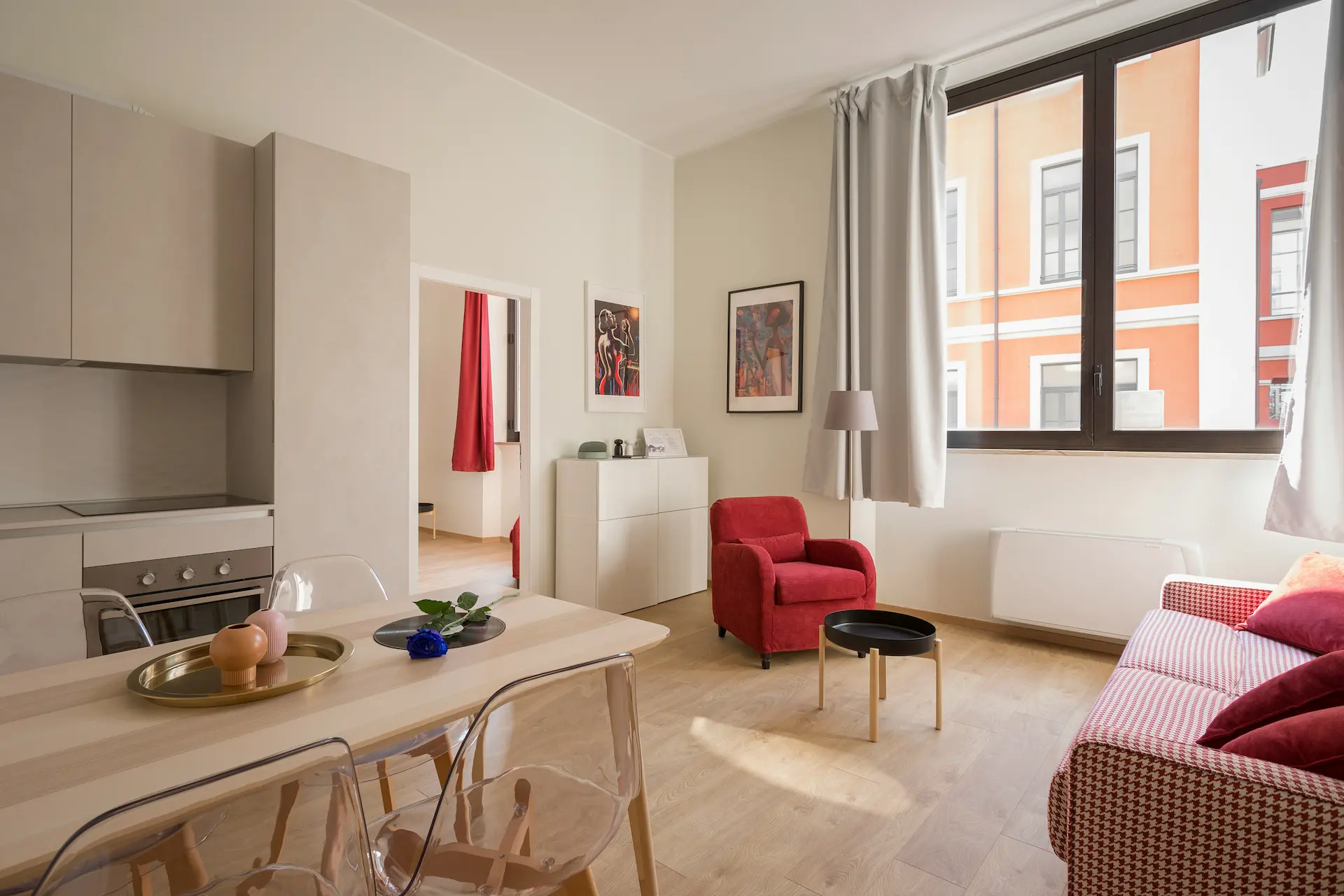
Furnished apartments for short-term living in Berlin offer different standards of equipment. In general, all essential furniture is provided, including a bed, wardrobes, a kitchen with appliances, a table, chairs, and often a sofa. Quality ranges from simple functional furnishings to high-end designer furniture.
Modern providers focus on stylish interiors with well thought-out colour concepts and high-quality materials. The apartments are not only functional, but also create a homely atmosphere in which you feel at home immediately. You often find extras such as large flat-screen TVs, Wi-Fi, a washing machine, and even a dishwasher.
The furnishings usually include all necessary kitchen appliances, dishes, bed linen, and towels. Some providers even supply cleaning products and small welcome gifts. This makes moving in particularly easy because you essentially only need to bring your personal belongings.
When choosing, you should pay attention to details such as a balcony or terrace, natural light, sound insulation, and proximity to public transport. Many furnished apartments in Berlin also allow registration with the residents' registration office, which can be important for professional purposes or longer stays.
Costs and Financing for Short-Term Living
The costs for short-term living are usually higher than for a comparable long-term rental, but all utilities and furnishings are already included in the price. You pay a monthly all-inclusive rent that covers heating, electricity, internet, and often broadcasting fees as well. This makes budgeting very transparent and simple.
In addition to the monthly rent, most providers require a security deposit that ranges from one to three months' rent. This is fully refunded when the apartment is returned in proper condition. Some providers also charge a one-time final cleaning fee or a service flat fee.
An important cost advantage is that you do not need to buy or transport furniture. Especially for stays of only a few months, the costs of purchasing furniture and moving would quickly outweigh the savings of a cheaper unfurnished apartment. In addition, you avoid the effort and costs of setting up electricity and internet contracts.
When planning your financing, keep in mind that many employers cover the costs of temporary accommodation for work-related stays. In many cases, you can also deduct these expenses for tax purposes as work-related costs if you can provide proof of maintaining two households.
Advantages of Short-Term Living
The biggest advantage is flexibility. You can respond quickly to professional or personal changes without making a long-term commitment. At the same time, you have the comfort of a complete home with private space, your own kitchen, and often a balcony or terrace.
The time savings should not be underestimated. While a standard apartment search can take weeks or months, with short-term living you can often move in at very short notice. This is especially valuable if you need to respond quickly for work or manage unexpected life situations.
Another advantage is reduced bureaucracy. You do not have to deal with multiple utility providers, you do not need to buy or sell furniture, and you have a single point of contact for everything related to your accommodation. This reduces stress and allows you to focus on other important matters.
For people who want to get to know new cities or neighbourhoods, short-term living is an ideal option. You can test different areas before deciding on a permanent home. This is particularly beneficial in a diverse city like Berlin, where each district has its own character.
Disadvantages and Challenges
The most obvious disadvantage is the higher cost compared to long-term renting. Per square metre, you usually pay significantly more than for an unfurnished long-term apartment. However, this is partly offset by the savings on furniture, setup costs, and the added flexibility.
The fixed-term nature of the lease can also be seen as a drawback. You do not have long-term security and must look for alternatives in good time if you want to stay longer. Extensions are not always possible because landlords often have new tenants already planned.
Another aspect is potential anonymity. In temporary living situations, close neighbourly relationships are less likely to develop, which can affect the feeling of belonging. The interior may also not match your personal taste because it is selected for a broad target group.
Availability can be limited in popular cities and at certain times. In Berlin, apartments are often booked out quickly during peak season or at the beginning of the semester, which makes early planning necessary.
Tips for Finding the Right Accommodation
When searching, you should first define your priorities clearly. Is a central location more important to you, or do you value peace, quiet, and greenery? Do you need a separate workspace, or is a combined living and sleeping area sufficient? These considerations help you narrow your search and find the right offer.
Pay attention to transport connections, especially if you need to commute regularly to a fixed workplace. In Berlin, it is often wise to consider proximity to S-Bahn or U-Bahn stations because they provide fast connections to all districts. A good public transport app can help you estimate travel times.
If possible, request a virtual viewing or detailed photos. Pay attention not only to the furniture, but also to practical aspects such as daylight, noise levels, and how functional the setup is. Ask about the furnishings. Are towels, bed linen, and kitchen utensils provided?
Find out about house rules and possible restrictions. Some landlords do not allow pets, require compliance with quiet hours, or have rules regarding visitors. Also clarify whether registration with the residents' registration office is possible if you need it for professional purposes.
Legal Aspects of Short-Term Living
Legally, short-term living differs significantly from traditional renting. A fixed-term lease is usually concluded, which includes a set end date and is not automatically renewed. This provides greater legal certainty for both parties, but it also limits flexibility.
Fixed-term leases involve different termination periods and procedures. In most cases, the landlord can only terminate early in special circumstances, while you as the tenant may have a special right of termination if your circumstances change. Make sure you understand these rules thoroughly before signing the contract.
Rent caps generally do not apply to furnished short-term rentals, as they are considered a special form of housing. Nevertheless, prices should be reasonable in relation to the services provided. Ask for a transparent breakdown of all costs and make sure there are no hidden fees.
The deposit is handled similarly to standard leases. The landlord must keep the money separate from their own assets and return it after the rental period ends, minus any justified claims. Document the condition of the apartment carefully at move-in and move-out to avoid disputes later.

Future Trends in Short-Term Living
The concept of short-term living is becoming increasingly important as the world of work and lifestyles continue to change. Remote work, flexible working models, and rising mobility across society are driving growing demand for temporary housing solutions.
Technology is playing an ever greater role in letting and management. Digital platforms make it possible to view apartments virtually, sign contracts online, and manage the entire rental process digitally. Smart home technologies within the apartments increase both comfort and energy efficiency.
Equipment standards are also continuously rising. Modern providers focus on high-quality furnishings, professional interior design, and thoughtful details that turn temporary living into a real experience. Sustainability is becoming more important as well. Energy-efficient appliances, eco-friendly materials, and local partners are gaining relevance.
Integration into local communities is also being expanded. Some providers organise events for their tenants, offer co-working spaces, or connect residents with local service providers and activities.
Conclusion
Short-term living is a contemporary solution for people who want to combine flexibility with comfort. Especially in a dynamic city like Berlin, it offers the opportunity to quickly and easily find a fully equipped home. The higher costs are offset by the time saved, the elimination of furniture expenses, and the flexibility provided.
If you are facing a career change, have a project in a new city, or simply want to explore a new life situation, short-term living offers an ideal solution. With the right preparation and a reputable provider, your temporary stay can become a rewarding experience.
Find your perfect short-term apartment in Berlin now and enquire without obligation. A provider offers modern, stylish apartments with maximum comfort for your temporary stay in the capital.
Frequently Asked Questions about Short-Term Living
What Is the Minimum Rental Period for Short-Term Living?
The minimum rental period for short-term living varies depending on the provider, but it is usually three months. This time frame has proven practical because it creates predictable arrangements for both tenants and landlords. A shorter rental period is often not worthwhile due to administrative costs and the effort involved in furnishing and service.
Are Utilities Included in Short-Term Living?
Yes, with short-term living, all utilities are normally included in the monthly rent. This includes heating, electricity, water, internet, and often the broadcasting fee. This makes cost planning very transparent and simple because you only make one monthly payment and do not have to expect unexpected additional charges.
Can I Register My Address If I Stay Longer in Short-Term Accommodation?
With most reputable providers, registration with the residents' registration office is possible. This is particularly important if you need an official address in the city for professional purposes or longer stays. Before signing the contract, check whether the landlord will issue a landlord confirmation document.
What Furnishings Are Typically Included in Furnished Apartments?
Typically, all essential furniture is included, such as a bed, wardrobes, a table, chairs, and a fully equipped kitchen with appliances. In addition, bed linen, towels, dishes, kitchen utensils, a TV, Wi-Fi, and often a washing machine are provided. The exact furnishings vary depending on the provider and price category.
What Happens If I Want to Stay Longer Than Originally Planned?
An extension is not always possible because many fixed-term leases have a set end date, and new tenants may already be scheduled. Communicate your wish to extend as early as possible. Some providers can offer alternative apartments or enable extensions if capacity is available. Early communication is the key to success.

You may also find these articles interesting

Berlin Co-Living: Flexible living concepts for modern renters
Living in Potsdam: Your guide to rental prices and neighborhoods